
Germany is one of the top destinations in Europe for foreign construction workers in 2026, offering visa sponsorship, competitive salaries, and free or subsidized accommodation. Due to a severe labor shortage caused by an aging population, infrastructure expansion, and housing demand, German construction companies are actively recruiting skilled and unskilled workers from abroad.

For many job seekers from Africa, Asia, and other non-EU regions, Germany construction jobs with visa sponsorship have become a reliable pathway to work legally in Europe, earn in euros, and eventually qualify for long-term residence.
This guide explains everything you need to know about Germany construction jobs 2026, including salaries, visa types, free housing benefits, job roles, and how to apply successfully.
Why Germany Is Hiring Foreign Construction Workers in 2026
Germany is experiencing one of the largest construction labor gaps in Europe. According to industry estimates, the country needs hundreds of thousands of additional workers to meet demand in:
- Residential housing projects
- Road and railway infrastructure
- Commercial and industrial buildings
- Green energy and renovation projects
German employers are now allowed—and encouraged—to hire non-EU foreign workers because local labor supply is no longer sufficient.
Key reasons demand is rising:
- Massive housing shortages in major cities
- Government-funded infrastructure projects
- Expansion of renewable energy construction
- Retirement of older skilled workers
This has made construction jobs with visa sponsorship in Germany easier to access than ever before.
Types of Construction Jobs Available in Germany (2026)
Germany offers opportunities for both skilled and unskilled construction workers. Many positions do not require a university degree, making them ideal for hands-on workers.
🔹 Skilled Construction Jobs
- Electricians
- Plumbers
- Welders
- Carpenters
- Heavy equipment operators
- Site supervisors
- Civil technicians
🔹 Unskilled & Semi-Skilled Jobs
- Construction laborers
- Helpers and assistants
- Bricklayers
- Road construction workers
- Scaffolders
- Demolition workers
Most employers provide on-the-job training, and many roles do not require German language fluency at entry level.
Germany Construction Job Salaries in 2026
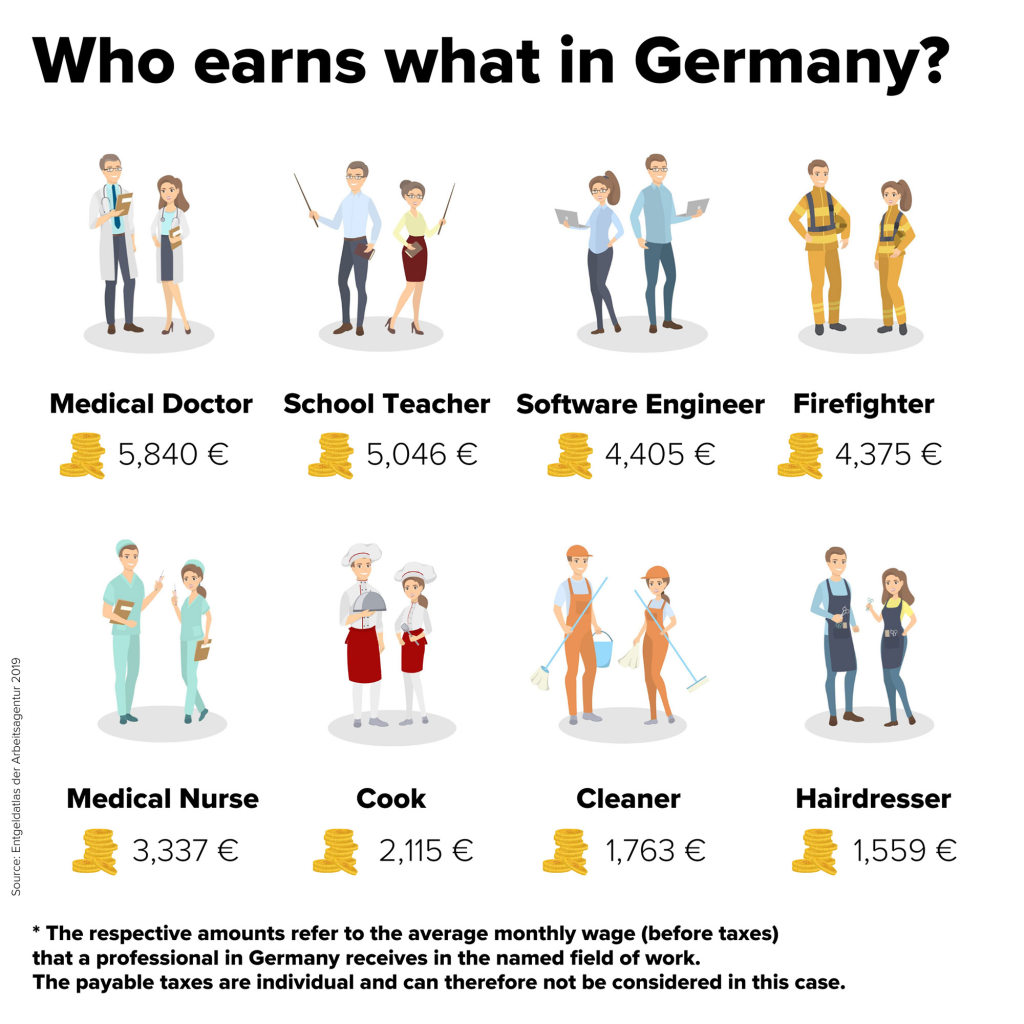
One of the biggest attractions of working in Germany is the high pay compared to many other European countries.
Average Monthly Salaries:
- Unskilled workers: €2,200 – €3,000
- Skilled workers: €3,500 – €5,500
- Specialists & supervisors: €6,000 – €7,500+
Annual Earnings:
- Entry-level: €28,000 – €36,000
- Skilled roles: €45,000 – €65,000
- Senior positions: €70,000+
Additional income often comes from:
- Overtime pay
- Weekend bonuses
- Night shift allowances
This makes Germany construction jobs high CPC keywords for advertisers because they attract serious international job seekers.
Free Accommodation for Construction Workers in Germany
Many German construction companies offer free or low-cost housing as part of the employment package, especially for foreign workers.
Accommodation benefits may include:
- Shared furnished apartments
- Employer-owned worker hostels
- Rent-free or heavily subsidized housing
- Utilities sometimes included
This benefit significantly reduces living costs, allowing workers to save more money while working in Europe.
Visa Sponsorship for Construction Jobs in Germany
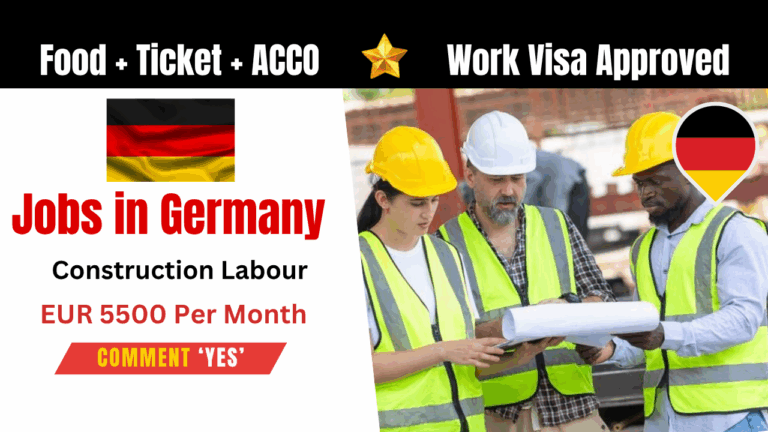
Germany offers multiple legal work visa options for construction workers.
Main Visa Types:
- Skilled Worker Visa – For certified tradespeople
- General Employment Visa – For approved job offers
- EU Blue Card (for higher roles)
- Opportunity Card (Chancenkarte) – Points-based system
What Employers Usually Sponsor:
- Job contract
- Work permit approval
- Visa documentation
- Sometimes relocation assistance
Some companies also assist with German language courses and local registration.
Who Can Apply for Germany Construction Jobs?
You can apply if you:
- Are 18–55 years old
- Have construction experience (formal or informal)
- Are physically fit
- Have a valid passport
- Can pass basic background checks
🔹 No degree required for most jobs
🔹 No IELTS or English test required
🔹 German language often optional at entry level
This makes Germany one of the easiest European countries to work in legally for construction workers.
Benefits of Working in Germany’s Construction Sector
Beyond salary, construction workers in Germany enjoy strong labor protections and social benefits.
Key Benefits:
- Paid annual leave (20–30 days)
- Health insurance coverage
- Pension contributions
- Family reunification options
- Pathway to permanent residence (PR)
- Stable long-term employment
After 2–5 years, many workers qualify for permanent residency, and later German citizenship.
How to Apply for Germany Construction Jobs With Visa Sponsorship
Step-by-Step Process:
- Find verified employers or recruitment agencies
- Apply online with CV and experience details
- Receive job offer and contract
- Employer applies for work permit
- Submit visa application at German embassy
- Travel and begin work in Germany
Where to Find Jobs:
- German construction company websites
- Licensed international recruiters
- Government job portals
- Employer-sponsored recruitment programs
⚠️ Avoid agents asking for illegal upfront fees. Legitimate employers deduct costs transparently or sponsor directly.
German Language Requirement: Is It Mandatory?
For most entry-level construction jobs, German is not mandatory. However:
- Basic German improves job options
- Higher pay roles may require A2–B1 level
- Some employers offer free language classes
Learning basic German significantly increases promotion chances and long-term settlement success.
Cost of Living vs Earnings in Germany
Thanks to free accommodation and strong wages, construction workers often enjoy high savings potential.
Typical Monthly Expenses (With Free Housing):
- Food: €250 – €400
- Transport: €80 – €120
- Utilities: Often included
- Personal expenses: €100 – €200
Many workers save €1,200 – €2,500 per month, depending on overtime and lifestyle.
Is Germany Construction Work Safe?
Germany enforces strict safety regulations on construction sites.
- Mandatory protective equipment
- Safety training provided
- Regulated working hours
- Strong workers’ rights
This makes Germany one of the safest countries in Europe for construction work.
Final Thoughts: Is Germany Construction Jobs 2026 Worth It?
If you are searching for:
- Work in Europe legally
- Visa sponsorship
- Free accommodation
- High-paying construction jobs
- Permanent residence pathway
Then Germany construction jobs in 2026 are one of the best opportunities available globally.
With strong demand, employer support, and long-term stability, Germany remains a top choice for foreign workers looking to transform their future through skilled or unskilled construction work.